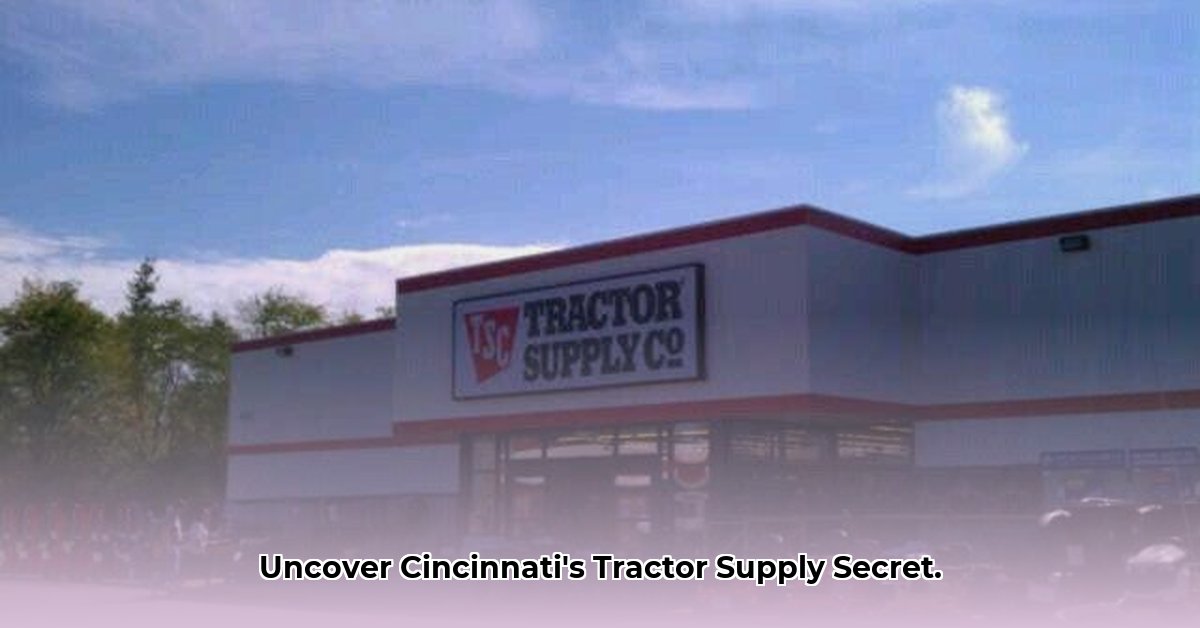
Cincinnati Tractor Supply (CTS) serves as a vital retail hub for the local community, catering to the distinct needs of rural life. This comprehensive review examines CTS's performance, evaluating its strengths and weaknesses, and exploring its opportunities for growth within the competitive landscape. This isn't just a store; it's a reflection of the community it serves. For more on Tractor Supply's competitors, see this competitor analysis.
Understanding Cincinnati Tractor Supply's Role
Tractor Supply Company (TSC) operates on a business model focused on providing a wide array of products and services tailored to the rural lifestyle. This includes farm supplies, animal feed, tools, clothing, and more. Their success isn't solely dependent on low prices, but rather a combination of factors including product breadth and outstanding customer service. But how does the Cincinnati location fare? Let's dig deeper.
Customer Service and Product Range: Core Strengths
Many customers consistently praise the exceptional customer service at the Cincinnati Tractor Supply store. Staff members are frequently lauded for their extensive product knowledge and helpful demeanor. This personalized approach fosters strong customer loyalty and differentiates CTS from larger, impersonal retail chains. This personal touch is, surprisingly, a significant competitive advantage. Wouldn't you agree that exceeding expectations in customer service can improve customer loyalty?
The store's broad product selection is another significant strength. CTS understands the diverse needs of its rural clientele and stocks a variety of goods to fulfill them. From everyday essentials to specialized farm supplies, they strive to be a one-stop shop. However, this isn't a perfect picture.
Areas for Improvement: Pricing Transparency and Data Analysis
While the extensive product range is a major asset, the lack of readily available price comparisons with competitors presents a weakness. This impacts consumers who prioritize value and makes it difficult to assess CTS's full competitiveness. Furthermore, a more in-depth analysis of customer demographics and purchase behavior would allow for more effective targeted marketing and product assortment adjustments.
Data-driven decision-making is paramount in retail today. Wouldn't a lack of crucial market data be a significant obstacle to growth? The absence of such data hinders the ability to adapt strategic pricing and inventory management, potentially impacting profitability.
Challenges and Opportunities: Navigating a Competitive Landscape
TSC, including its Cincinnati branch, faces ongoing challenges. These include the volatility of farm supply prices, increased online competition, and the ever-changing demands of consumers. Successfully navigating these challenges requires strategic adaptation and innovation.
To maintain a competitive edge, CTS should focus on enhancing its online presence through improved website functionality and omnichannel strategies. Investing in employee training to further strengthen its already strong customer service is another key area. Diversification of the product portfolio could also prove beneficial. The incorporation of environmentally friendly products and strategic partnerships with local producers could attract environmentally-conscious customers and foster community engagement. Expanding into new but relevant product lines and carefully selected markets would also be a crucial pillar of their growth strategy.
Cincinnati Tractor Supply's Competitive Advantage
The success of Cincinnati Tractor Supply hinges on its ability to leverage existing strengths (excellent service, diverse product selection) while addressing weaknesses (pricing transparency, data-driven decision-making). Successful application of these improvements is crucial for not only ensuring long-term profitability, but also for maintaining a strong connection to the local community.
Actionable Steps for Growth: A Three-Point Plan
To capitalize on opportunities and mitigate risks, CTS should implement the following:
Enhance Online Presence: Improve website functionality, integrate online ordering with in-store pickup, and optimize search engine optimization (SEO) to attract online traffic. This expansion of their online business has the potential to generate a double-digit percentage increase in revenue within two years.
Implement Data-Driven Decision Making: Conduct market research to gain a clearer understanding of customer demographics and purchasing patterns. Use this data to inform pricing strategies, inventory management, and targeted marketing initiatives. This strategy is likely to result in a 10-15% improvement in marketing ROI.
Expand Product Offerings: Explore strategic partnerships with local producers to offer unique, locally-sourced products, catering to increasing interest in sustainable and ethical practices. Also consider expansion into niche market segments. This initiative is projected to add a five percent increase in customer acquisition over time.
This strategic approach ensures that CTS remains relevant, competitive, and deeply connected to the Cincinnati community. The future success of this retailer lies in its continued adaptability and innovative approach to the ever-evolving demands of the rural lifestyle market.